Sports Performance & Engineering
Test more aerodynamic decisions before race day.
AeroCloud helps sports engineering and performance teams compare rider positions, helmets, equipment, and race setups in hours with CFD results benchmarked against wind-tunnel testing.





“We went from a 12-month design cycle to finalising the design within 1 month - running >1,200 simulations, same team, same budget.”
What changes when testing stops being a bottleneck
More design ideas tested - same team, same budget.
Per simulation cycle. Same-day decisions.
Measured drag agreement vs. wind tunnel at the yaw angles riders use most.
Decisions you can make
What can your team decide faster?
AeroCloud turns aerodynamic questions into evidence your team can act on - before committing track, wind-tunnel, or prototype time.
Rider position optimization
Compare CdA across race positions before committing track or wind-tunnel time.
Helmet & equipment testing
Screen helmet, wheel, frame, and apparel variants before physical prototyping.
Yaw sensitivity analysis
Understand how performance changes across realistic crosswind conditions.
Race setup comparison
Evaluate time-trial vs. road positions, skinsuit choices, and equipment combinations.
Development prioritization
Identify which changes deserve expensive wind-tunnel or track validation.
Validation & workflow
Wind-tunnel benchmarked workflow for sports aerodynamics.
Performance teams move from questions to validated designs in 4 hours. Your designers upload an STL, pick a sports scenario, and get a wind-tunnel-grade answer the same day.
- Day one, your team runs it. No CFD hire. No training course. No tunnel slot.
- Hours per answer. Drag, lift, yaw sweep, and pressure maps are ready to share.
- Decision-ready results that help teams choose what to prototype, test, or race.
- Validated against independent wind-tunnel testing. Reproduced the full CdA-vs-yaw curve across a ±15° sweep, within 2-3% at the angles riders spend most time in.
CdA vs yaw across a ±15° sweep - AeroCloud vs. wind-tunnel reference
Matching curve shape, drag drop-off, and yaw sensitivity. Measured drag agrees within 2-3% at the angles riders use most; some published benchmark cases show error below 1.5%, depending on geometry, setup, and comparison method.
Visual proof
See the decision in the airflow
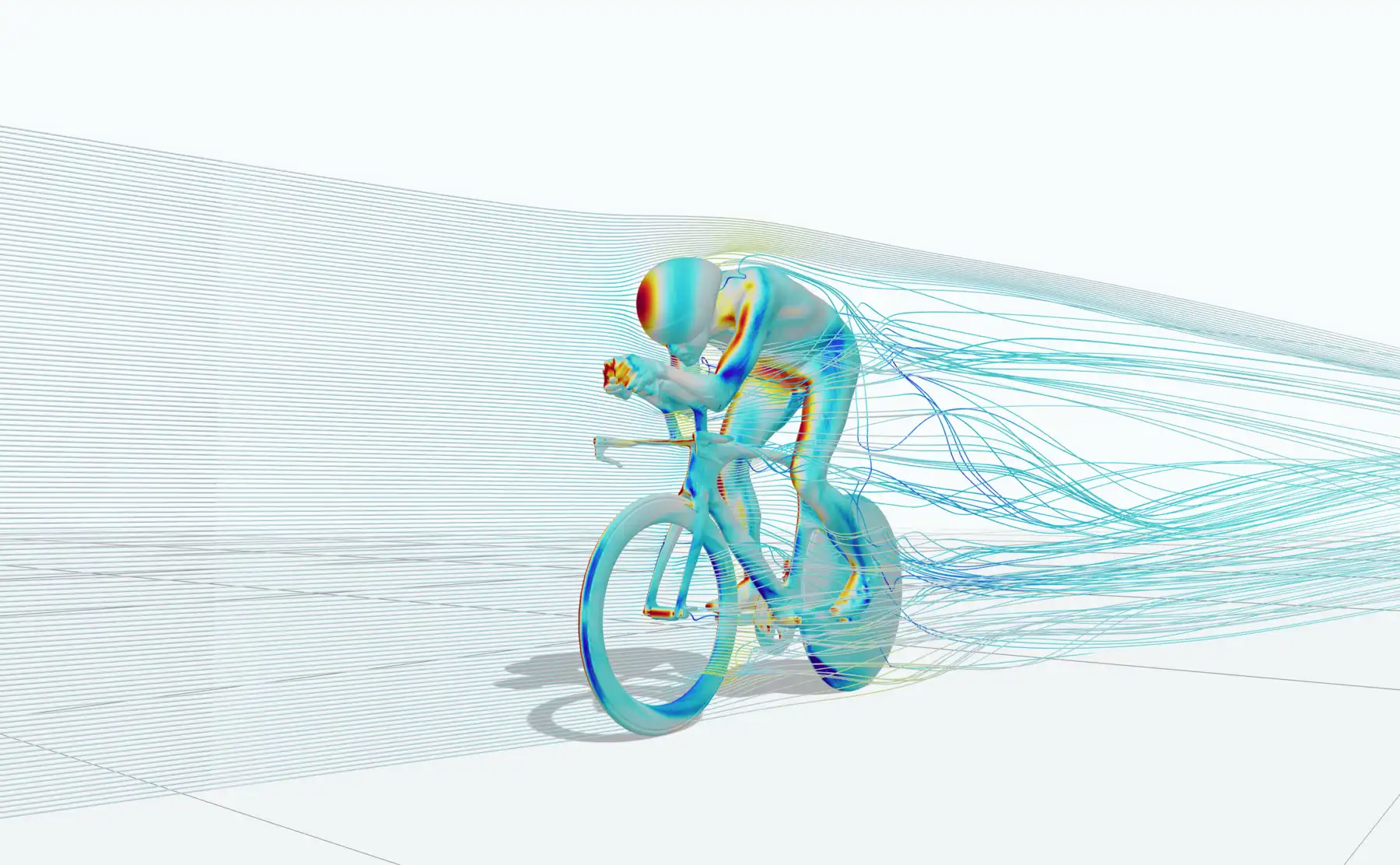
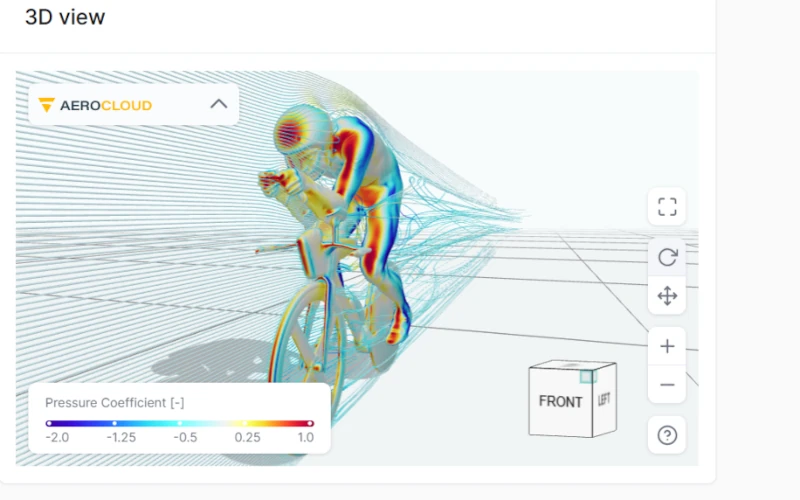
Compare the baseline rider position with the AeroCloud-optimized best position. The highlighted zones show exactly where a position or equipment change buys back drag - and which variant is worth prototyping next.
Rider positions ranked by CdA - red is baseline position
From limited testing to continuous aero development
Built for your sports aerodynamics workflow
Whether your team is optimizing athlete position, developing faster equipment, or validating design changes before wind-tunnel time, AeroCloud helps you compare more options with evidence your team can act on.
Performance teams
Close the aero gap before race day by comparing position, equipment, and setup changes earlier.
Product development teams
Test more helmet, frame, wheel, and apparel concepts before committing to prototypes.
Research and innovation teams
Run repeatable aerodynamic studies across yaw angles, speeds, and design variables.
How it works
From performance question to design decision in three steps.
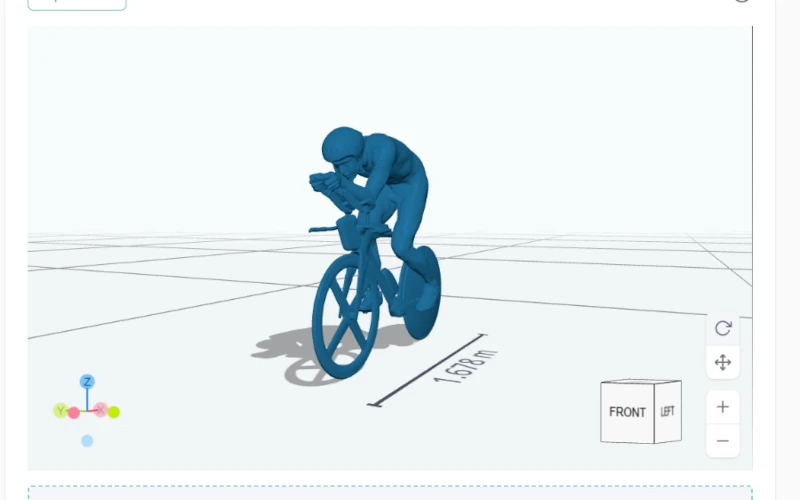
Import your geometry
Upload your STL or OBJ - rider, helmet, frame, or full setup - straight into AeroCloud.
Set up and run
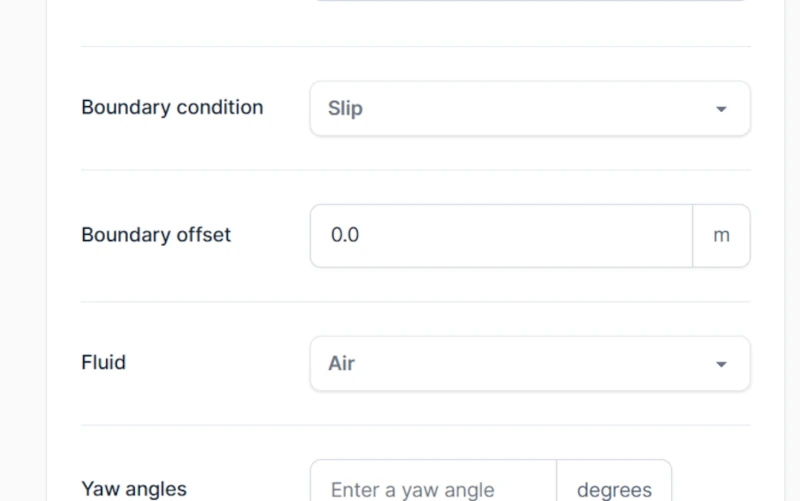
Set speed, yaw, boundary conditions and mesh quality, then hit run. Meshing and simulation happen in the cloud.
See the results
Read drag, lift and CdA with 3D pressure, streamlines and slices - then compare variants and share the report.
Athlete-time calculator
Translate drag reduction into race impact
A small CdA change can decide whether a product change, position adjustment, or equipment choice is worth testing further. Use the calculator to estimate how aerodynamic gains may translate into time saved over a race distance.
This calculator provides decision-support estimates. Actual race outcomes depend on athlete power, course profile, weather, rolling resistance, equipment, and pacing strategy.
The offer
Continuous aero development in one subscription.
Move from project-based testing to continuous aerodynamic development. One flat monthly subscription, a simulation allowance that fits your team, no per-project quotes.
Customer stories
Customer stories from the field
How performance teams, brands, and research groups use AeroCloud to test more and decide earlier.
How KASK cut their design cycle from a week to hours and tested 20× more.
How KASK went from 2 simulations a month to 60, same team, same budget, better helmets.
The Tour de France: A Catalyst for Technological Advancements in Cycling
The Tour de France drives cycling's tech evolution, pushing limits for innovation.
AeroCloud and Sub7 attempt history's fastest triathlon
Kristian Blummenfelt achieved the unthinkable. He and his team set the new Sub7 IronMan record.
Formula 1 Aero Insights Pt.2: Single vs Multi-Element Rear Wings
Understand how multi and single element rear wings impact a racing car's aerodynamics performance
Formula 1 Aero Insights: Single vs Multi-Element Front Wings
Formula 1 front wings: single or multi-element? Each offers unique advantages for track performance.
What is AeroCloud for sports aerodynamics?
AeroCloud is a cloud-based CFD platform for sports aerodynamics teams. It helps engineers and performance teams simulate airflow around athletes, equipment, and vehicles to compare drag, CdA, pressure, wake behavior, and yaw sensitivity before physical testing.
FAQ